How to keep a self-knowledge journal (and what it's really for)
A journal isn't for writing beautifully: it's for having data about yourself. How to keep one so that, in a few months, it shows you something you didn't see.
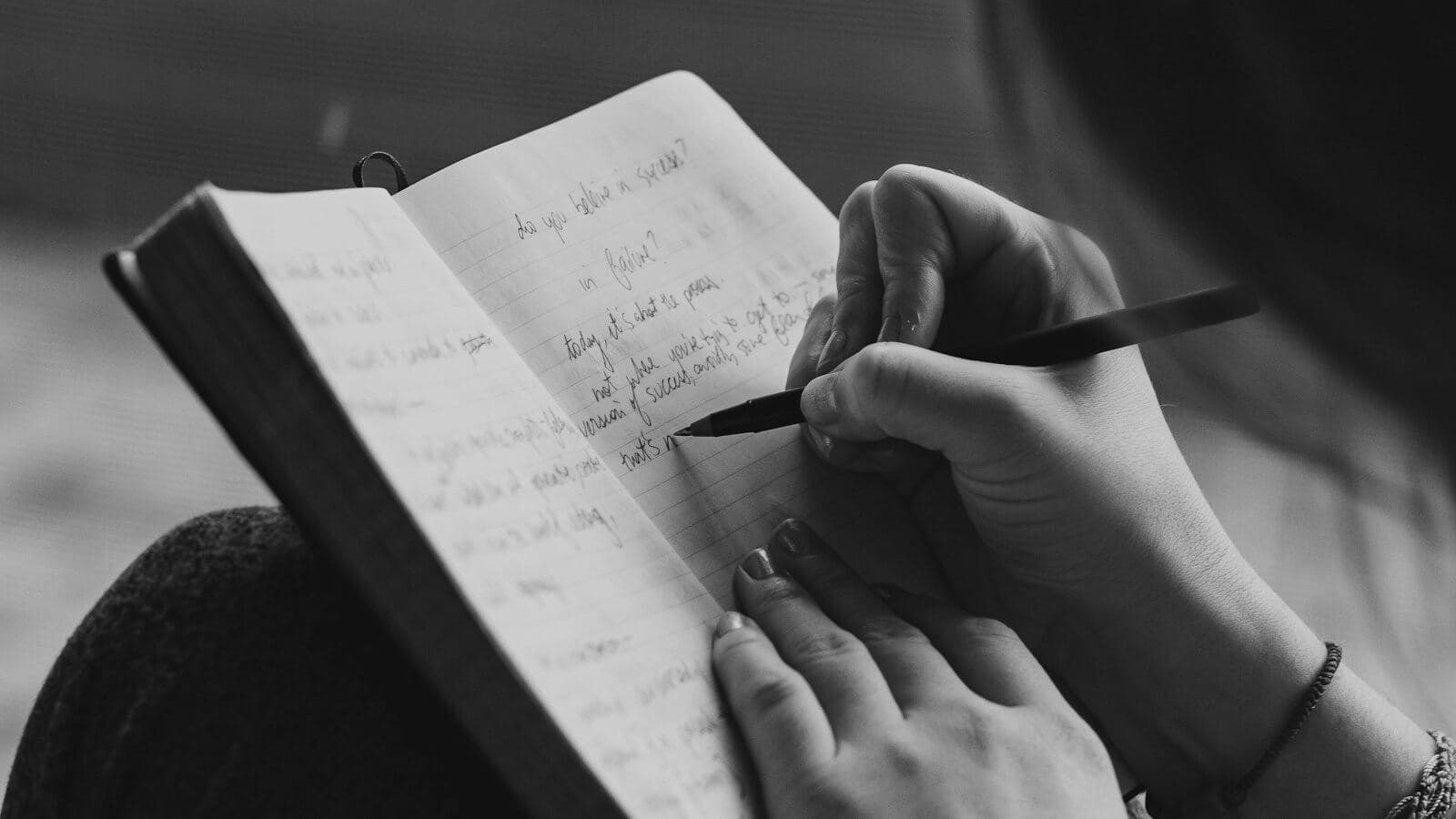
Memory isn't a good record of yourself. We remember what confirms the story we already tell ourselves and forget what doesn't fit. A journal corrects that: it puts down in writing what happened and what you felt before memory edits it.
You don't need to write well or a lot. You need to write in a similar way, regularly, and reread.
What to write down
Separate what happened from what you think about what happened. «I argued with my brother about the inheritance» is a fact; «he always leaves me alone with everything» is an interpretation. Both are useful, but mixed together they can't be compared later.
- What happened today that mattered to you, in one or two lines.
- How you felt, with a concrete word (not «good» or «bad»).
- A decision you made or put off.
- Something that repeated from another day.
How often and how much
Better five minutes every day than an hour once a month. Regularity is what lets you see patterns: a record with weeks-long gaps shows the exceptional days, not the ordinary ones.
If one day you have nothing, write that down. «Uneventful day» is data too.
Rereading is half the work
Once a month, read the whole month in one go and note separately what repeats: people, situations, times of day, emotions. That's where the journal starts giving you back something you didn't see while writing it.
Crossing it with your cycles, without forcing it
If you use your Personal Year or your personal day as a framework, the journal is the way to check it instead of believing it. Write down what happened first and only then look at what your cycle said. If it matches, good; if not, that's information too.
The most common mistake is the other way round: reading the cycle in the morning and then searching the day for what confirms it. That way any system seems to be right.
Frequently asked questions
Paper or digital?
Whichever you'll actually use. Paper helps you write more slowly; digital helps you search and reread. What matters is that it's at hand at the same time every day.
Where is the Molino journal stored?
In your browser. Molino has no server to store your profile or what you write.
Want to know what YOUR date of birth says?
Create your free map with numerology, astrology and the Chinese zodiac.
Create my map →Related articles
Your personal map
Cross numerology, astrology and the Chinese zodiac in a single map, free and with no sign-up.
Create my map